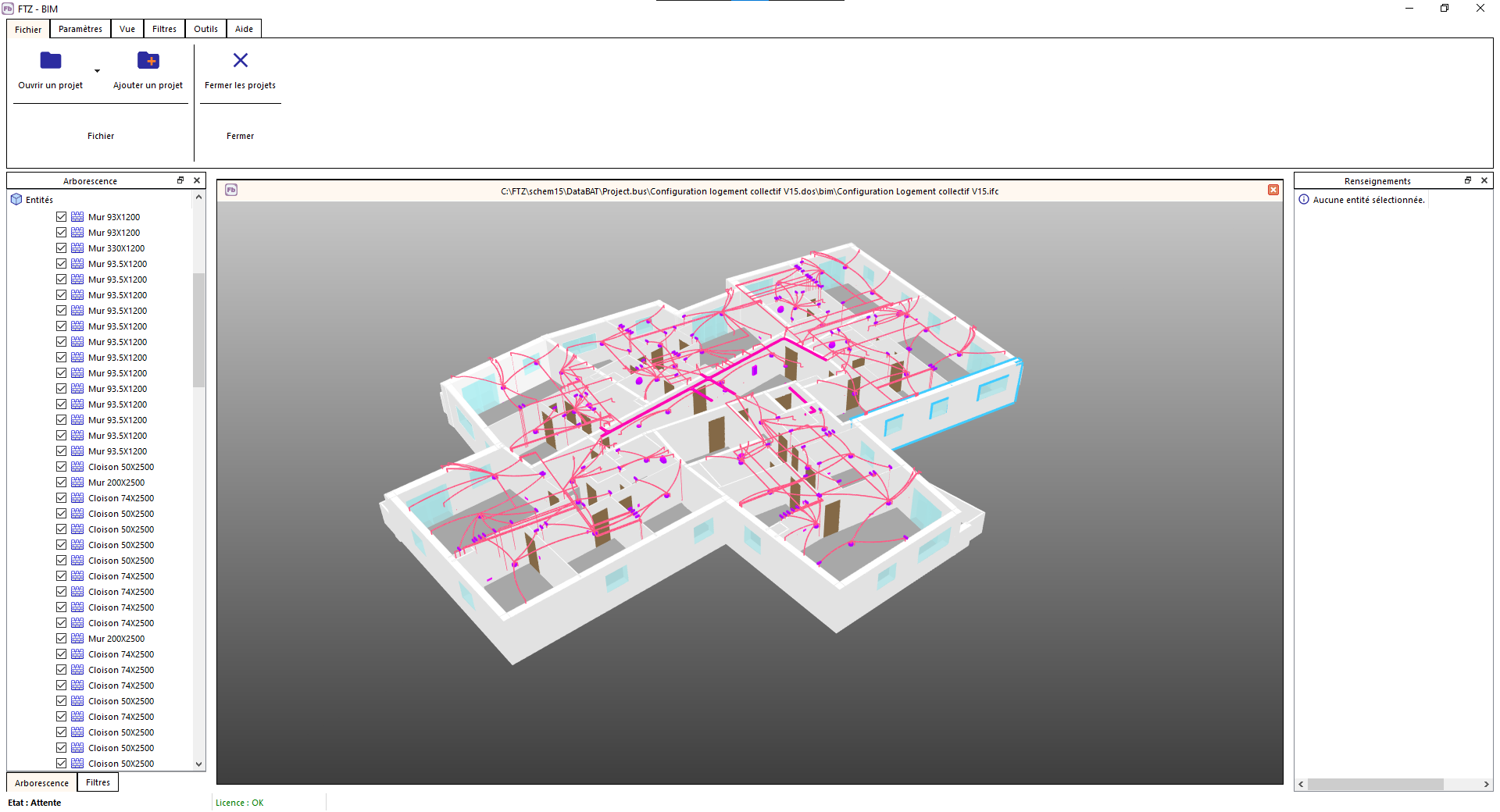
In BIM projects, software such as Revit™ is often mandated by the client as the primary tool. However, for an electrical engineering firm, working directly within this environment presents practical challenges in terms of productivity.
The combined SchemBAT + FTZ-BIM approach addresses these challenges while remaining fully compliant with your project’s BIM requirements.
Problem #1: General-purpose BIM software is not optimized for electrical design
For an electrical engineering firm, working in BIM software comes with real limitations:
Placing devices is time-consuming and tedious,
creating and assigning them to circuits is not automated,
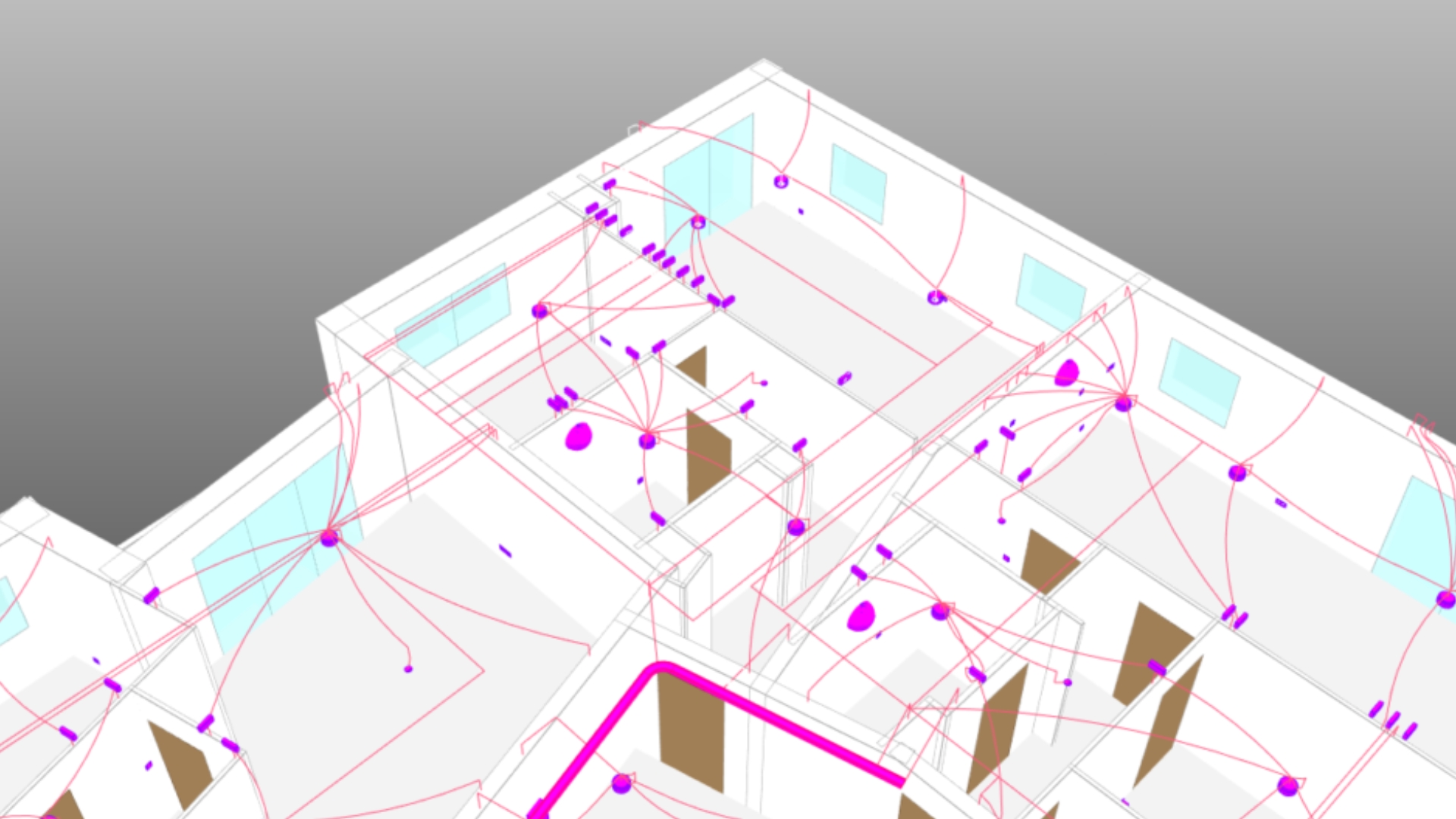
cables are not displayed,
schematic logic is defined in a separate software program,
and every change can be cumbersome.
The design firm spends time figuring out how to use the tool, not designing.
SchemBAT : Electrical Engineering Software Designed for Productivity
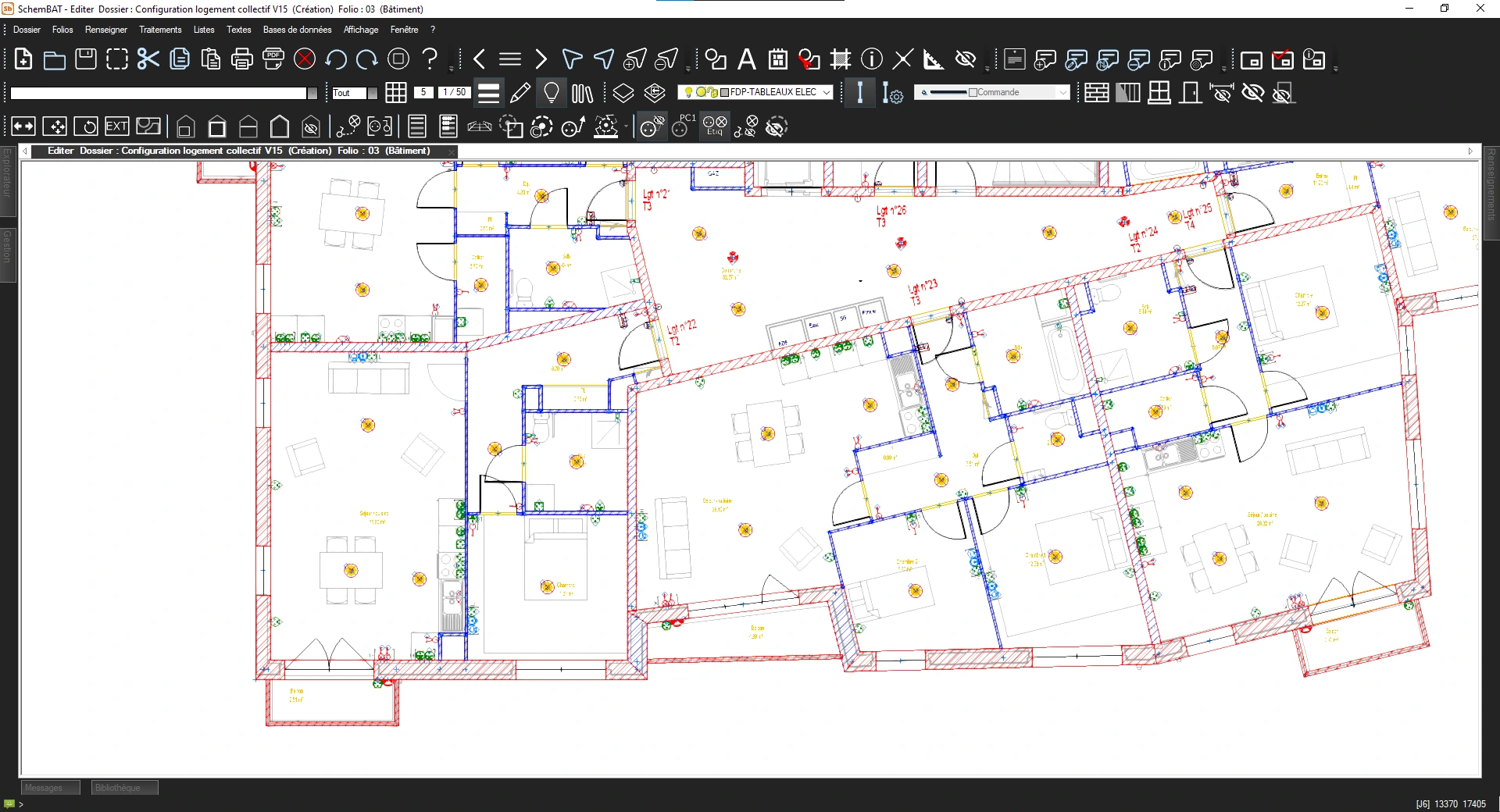
SchemBAT is software designed specifically for electrical engineering projects:
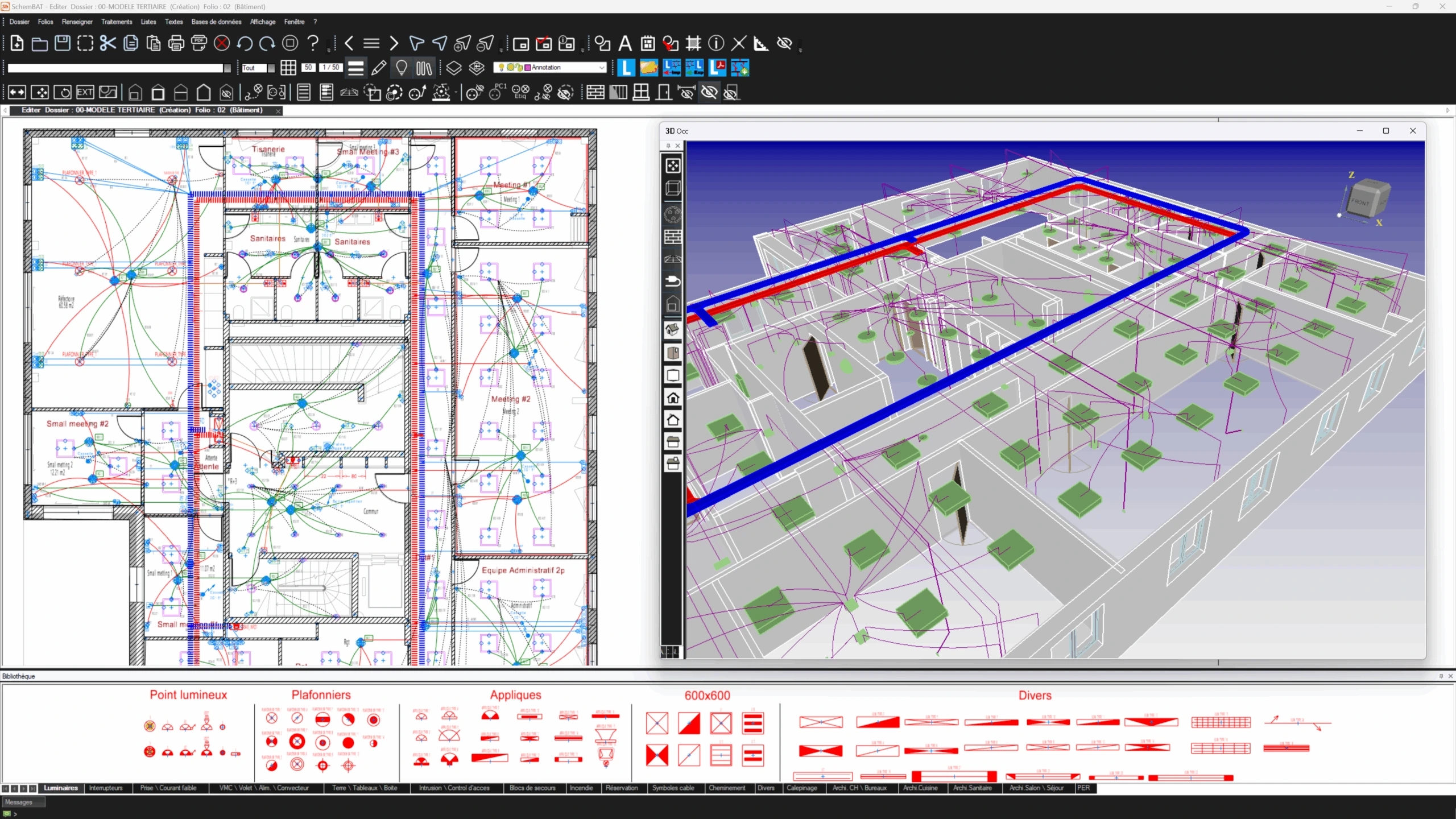
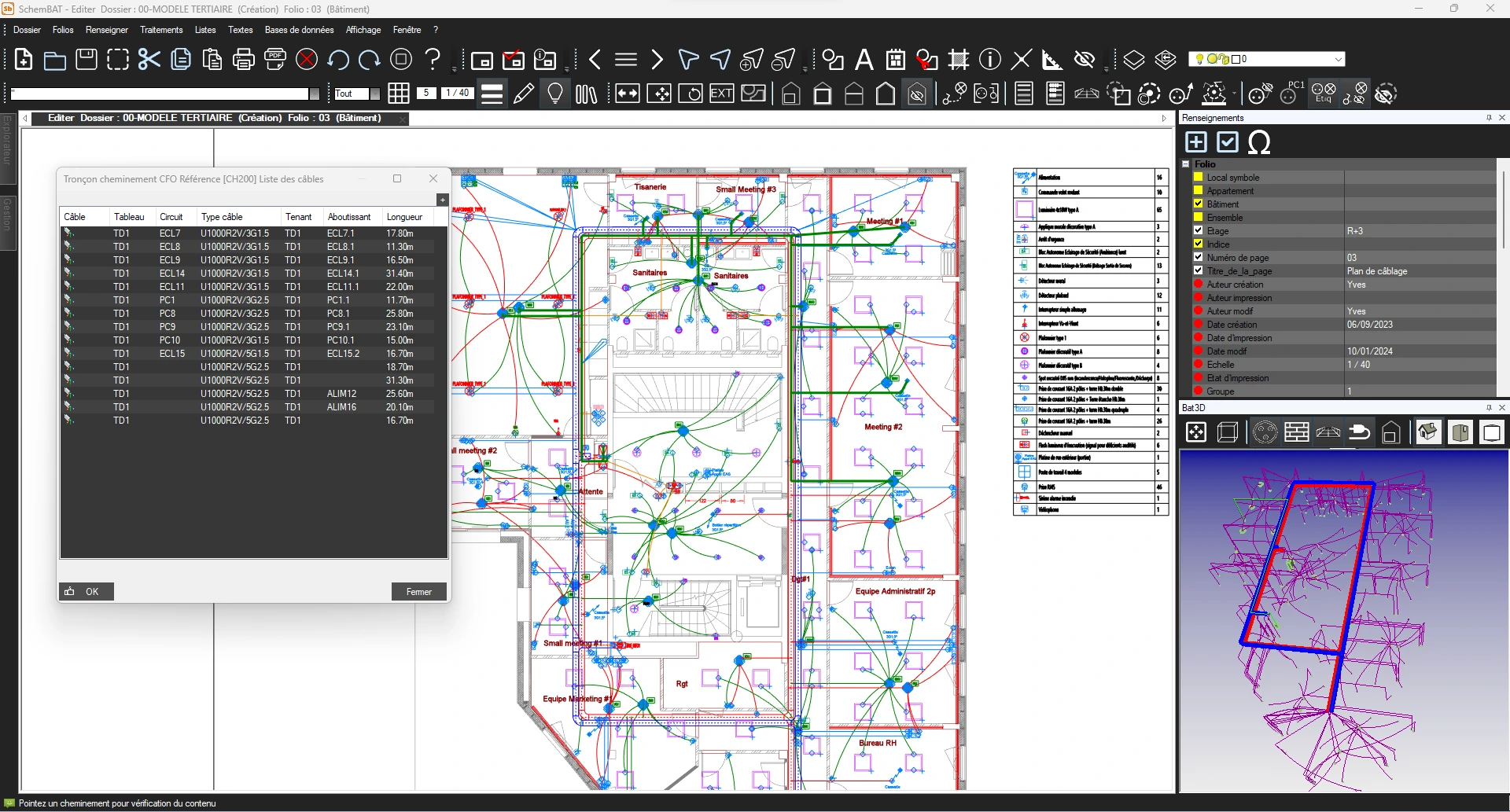
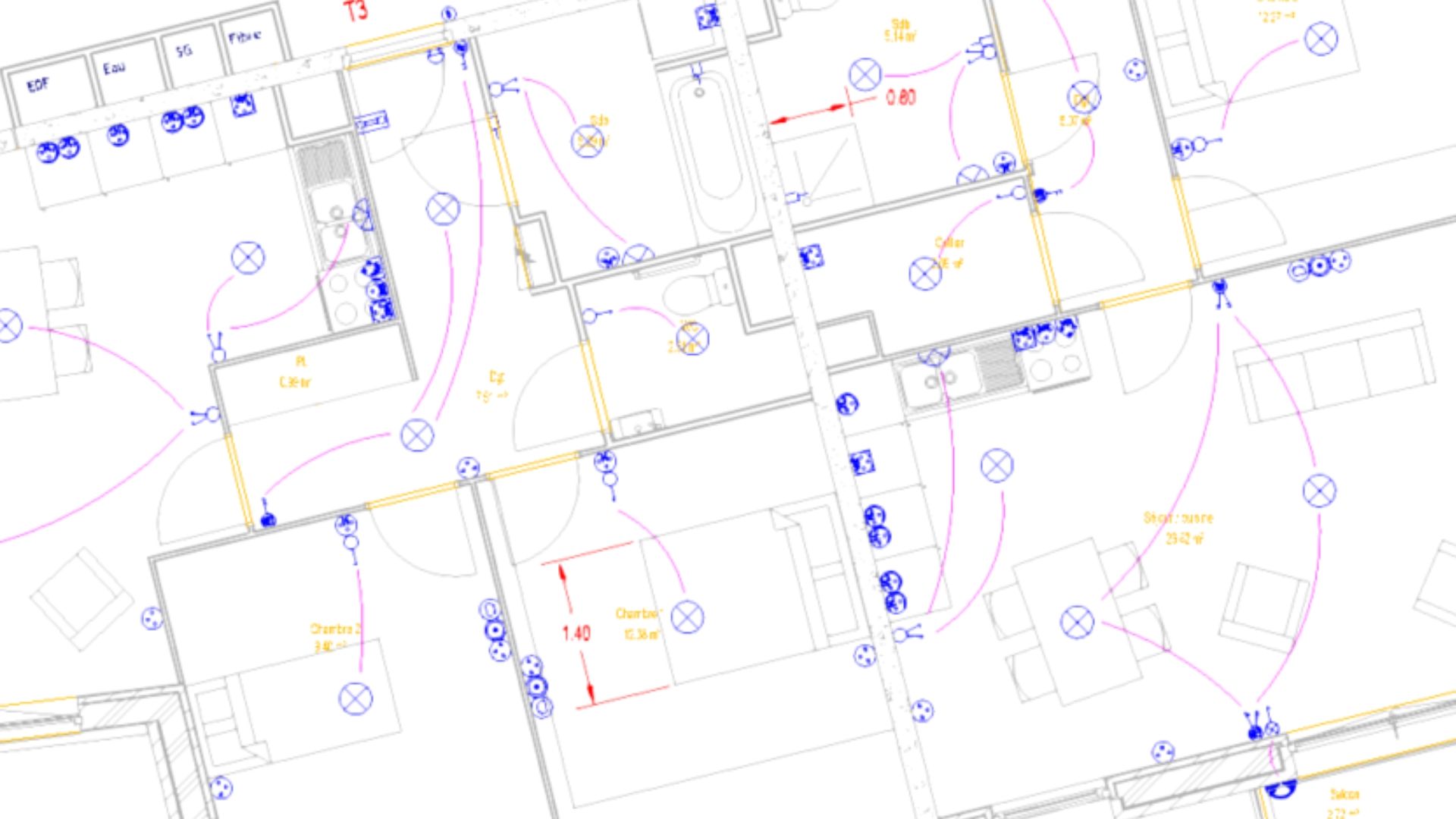
construction drawings are automatically generated and organized (device layout, wiring),
schematics and panel layouts are linked to the wiring diagrams,
parts lists, cable lists, and circuits are consistent.
The engineering department can now operate with a streamlined and controlled workflow.
Problem #2: Duplicate work between schematics and BIM models
In a traditional study without dedicated electrical BIM software:
layout and wiring are done separately using general-purpose drafting software,
the model is populated manually,
and there is a real risk of desynchronization.
FTZ-BIM: The bridge between your electrical software and the building model
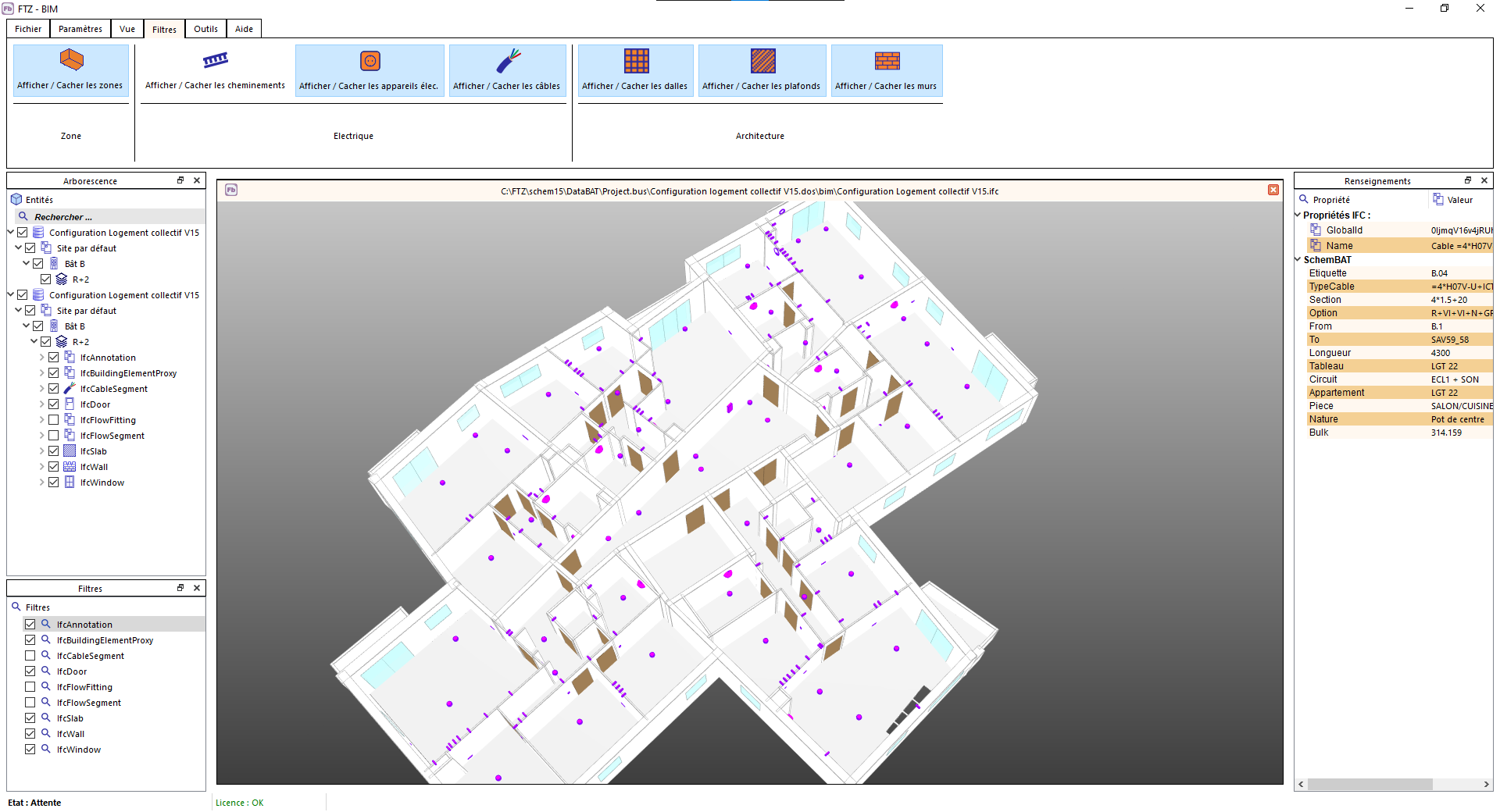
FTZ-BIM bridges the gap between the design office and the BIM environment:
sending electrical data directly to the model,
retrieving relevant information from the BIM model,
maintaining consistency between the two environments.
No more double data entry, fewer errors.
Problem #2: Duplicate work between schematics and BIM models
In general-purpose BIM software:
changes take a long time,
it’s difficult to track their impact,
and propagation errors are common.
With SchemBAT and FTZ-BIM, specialized software for electrical engineering firms :
changes are made on the discipline-specific side,
they are propagated to the model,
and consistency is maintained.
Change management is secure.
Engineering firms Organization: Two Approaches to BIM for Electrical Systems
specialized production by the electrical engineering firm,
BIM used as a communication tool,
better control over deadlines.
An organizational approach better suited to the real-world constraints of engineering firms.
Conclusion : Which electrical BIM software is right for your engineering firm ?
For a building electrical engineering firm, working directly in general-purpose BIM software often means sacrificing productivity to meet BIM requirements.
The SchemBAT + FTZ-BIM approach, on the other hand, allows you to :